
Anúncios
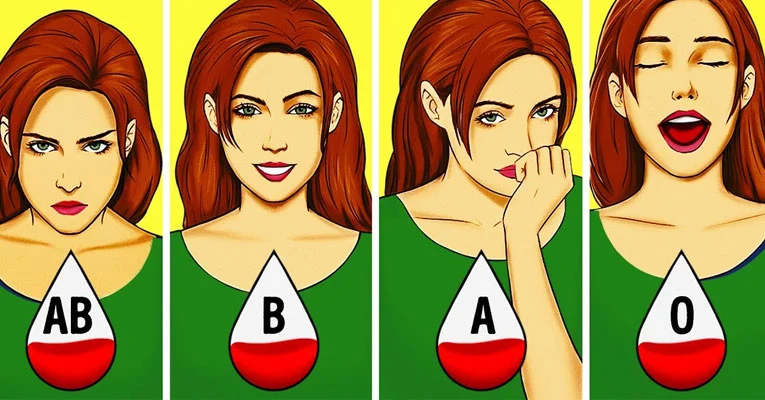
Have you ever wondered if your blood type could reveal hidden aspects of your personality? This fascinating concept has captivated millions worldwide.


The idea that blood type influences personality traits originated in Japan and has since spread across Asia and beyond. Known as “ketsueki-gata,” this belief system suggests that the four main blood types—A, B, AB, and O—correlate with distinct behavioral patterns, emotional responses, and compatibility with others.
Anúncios
While Western science remains skeptical about the correlation between blood type and personality, millions of people find surprising accuracy in these descriptions. Whether you view it as entertainment or a genuine self-discovery tool, exploring your blood type personality profile can offer intriguing insights into your character and relationships. Let’s dive deep into what each blood type might say about you! 🩸
🔬 The Origins and Cultural Significance of Blood Type Personality Theory
The blood type personality theory traces its roots back to 1927 when Japanese professor Takeji Furukawa published a paper titled “The Study of Temperament Through Blood Type.” His work suggested that individual personality traits were inherited through blood and could be predicted accordingly. Though initially dismissed by the scientific community, the theory gained massive popularity in Japan during the 1970s after journalist Masahiko Nomi published a bestselling book on the subject.
Anúncios
Today, blood type personality analysis remains deeply embedded in Japanese culture. It’s common for people to discuss blood types on first dates, during job interviews, and even when forming friendships. Similar beliefs have spread throughout South Korea, Taiwan, and other parts of Asia, where blood type compatibility is considered as seriously as zodiac signs in Western cultures.
The four blood types—A, B, AB, and O—represent different antigens present on red blood cells. While medical science acknowledges these biological differences, the leap to personality prediction remains controversial. Nevertheless, the psychological phenomenon known as the “Barnum effect” might explain why so many people identify with their blood type descriptions, finding personal meaning in generalized statements.
💙 Type A Personality: The Perfectionist and Harmonizer
People with Type A blood are often described as organized, detail-oriented, and deeply considerate of others. They tend to value harmony in their relationships and will go to great lengths to avoid conflict. Type A individuals are known for their punctuality, responsibility, and strong sense of duty, making them reliable friends, partners, and colleagues.
On the emotional side, Type A personalities can be sensitive and sometimes anxious. They internalize stress and may struggle with perfectionism, constantly setting high standards for themselves. This self-critical nature can lead to overthinking and difficulty relaxing, as they’re always mentally reviewing what could be improved or what might go wrong.
Strengths of Type A Individuals
- Exceptional attention to detail and quality-focused work ethic
- Strong empathy and consideration for others’ feelings
- Patient and willing to invest time in relationships and projects
- Excellent at planning and organizing complex tasks
- Loyal and dependable in personal and professional settings
Challenges for Type A Personalities
- Tendency toward perfectionism that can create unnecessary stress
- Difficulty expressing negative emotions or standing up for themselves
- May suppress their own needs to please others
- Prone to anxiety and worry, especially about social perceptions
- Can be stubborn once they’ve committed to a particular approach
In romantic relationships, Type A individuals seek stability and emotional connection. They express love through thoughtful gestures and consistent care. However, they need partners who appreciate their sensitive nature and can provide reassurance when their anxious tendencies emerge.
🔴 Type B Personality: The Creative Free Spirit
Type B blood types are characterized by their independent thinking, creativity, and passion. These individuals march to the beat of their own drum, often pursuing unconventional paths and embracing their uniqueness. They’re spontaneous, optimistic, and bring infectious energy to social situations, making them naturally charismatic and engaging.
Unlike their Type A counterparts, Type B personalities aren’t bound by rules or social expectations. They value personal freedom and self-expression above conformity. This can make them innovative problem-solvers who think outside the box, but it can also lead to perceptions of being selfish or inconsiderate when they prioritize their own desires.
Type B Personality Strengths
- Highly creative with original thinking and fresh perspectives
- Flexible and adaptable to changing circumstances
- Passionate and enthusiastic about their interests
- Honest and direct in communication, avoiding manipulation
- Resilient and able to bounce back from setbacks quickly
Potential Weaknesses of Type B
- Can appear self-centered or insensitive to others’ needs
- May struggle with commitment and following through on obligations
- Tendency to be impulsive without considering consequences
- Sometimes perceived as unpredictable or unreliable
- May clash with more structured or traditional personalities
Type B individuals thrive in careers that offer variety, creative expression, and autonomy. They excel in artistic fields, entrepreneurship, and roles that reward innovative thinking. In relationships, they need partners who respect their independence and can match their spontaneous energy without trying to control or restrict them.

💜 Type AB Personality: The Rational and Mysterious Enigma
As the rarest blood type, Type AB individuals are often described as complex, mysterious, and sometimes contradictory. They combine characteristics of both Type A and Type B, making them adaptable chameleons who can navigate diverse social situations with ease. This dual nature allows them to see multiple perspectives and understand different viewpoints simultaneously.
Type AB personalities are typically rational, logical thinkers who approach problems analytically. Yet they also possess a creative, artistic side that emerges in unexpected ways. This combination makes them fascinating conversationalists who can discuss both practical matters and abstract concepts with equal enthusiasm.
Key Characteristics of Type AB
- Excellent mediators who can understand conflicting viewpoints
- Balanced combination of emotional sensitivity and logical thinking
- Diplomatic and tactful in handling delicate situations
- Mysterious aura that intrigues others but may create distance
- Adaptable to different environments and social groups
Challenges Faced by Type AB Individuals
- Internal conflict between their dual natures can cause indecision
- May seem aloof or difficult to truly know on a deep level
- Tendency to overthink situations from too many angles
- Can struggle with commitment due to seeing too many options
- Sometimes perceived as unpredictable or inconsistent
People with Type AB blood often excel in roles requiring diplomacy, critical thinking, and creativity. They make excellent counselors, designers, researchers, and strategists. In relationships, they need partners who can appreciate their complexity and give them space to explore their multifaceted interests without judgment.
🧡 Type O Personality: The Confident Leader and Realist
Type O individuals are natural-born leaders who radiate confidence and decisiveness. They’re practical, goal-oriented, and possess a strong competitive streak that drives them toward success. These personalities are straightforward, preferring honesty over diplomacy, which can make them both refreshingly genuine and occasionally blunt.
As the most common blood type worldwide, Type O personalities are often described as the “universal” type—adaptable, resilient, and capable of thriving in various circumstances. They’re action-oriented rather than contemplative, preferring to tackle problems head-on rather than deliberating endlessly about the best approach.
Type O Strengths and Attributes
- Natural leadership abilities with charisma and presence
- Confident decision-makers who take initiative
- Practical and realistic with strong common sense
- Energetic and enthusiastic about pursuing goals
- Loyal and protective of their chosen inner circle
- Resilient under pressure with strong crisis management skills
Areas for Growth in Type O Personalities
- Can be overly competitive or aggressive in pursuit of goals
- May appear insensitive due to blunt communication style
- Tendency toward jealousy or possessiveness in relationships
- Sometimes struggle with accepting criticism or admitting mistakes
- May prioritize success over emotional connection
Type O individuals thrive in leadership positions, athletics, sales, and any field that rewards ambition and results. In romantic relationships, they’re passionate and devoted partners who express love through protection and provision. They need partners who can handle their intensity and provide a calming, stabilizing influence when their competitive nature becomes overwhelming.
🌟 Blood Type Compatibility in Relationships and Friendships
Beyond individual personality descriptions, blood type theory extends to compatibility predictions between different types. Understanding these dynamics can provide insights into why certain relationships feel effortless while others require more work and compromise.
Type A and Type O can create a complementary partnership where O’s confidence helps A become more assertive, while A’s sensitivity softens O’s rougher edges. However, conflicts may arise from O’s directness clashing with A’s conflict-avoidant nature. Type A and Type AB often share intellectual and emotional wavelengths, creating harmonious connections built on mutual understanding.
Type B and Type AB can form dynamic, creative partnerships where both appreciate freedom and unconventional thinking. Type B with Type O creates an exciting but potentially volatile combination—both are strong-willed, which can lead to power struggles or passionate partnership depending on maturity levels.
| Blood Type Pairing | Compatibility Level | Key Dynamic |
|---|---|---|
| A + A | High | Harmonious understanding, may lack excitement |
| A + B | Moderate | Opposites attract but require compromise |
| A + AB | High | Balanced with strong emotional connection |
| A + O | Moderate-High | Complementary strengths with potential conflicts |
| B + B | Moderate | Fun and free but potentially unstable |
| B + AB | High | Creative synergy with mutual respect |
| B + O | Low-Moderate | Passionate but prone to clashes |
| AB + AB | Moderate-High | Deep understanding but may be too similar |
| AB + O | Moderate | Intriguing differences require patience |
| O + O | Moderate | Powerful but competitive dynamic |
🎭 The Psychology Behind Blood Type Personality Belief
While scientific research hasn’t established a proven link between blood type and personality, the psychological reasons for its popularity are well-documented. The Barnum effect, also known as the Forer effect, explains why people identify with generalized personality descriptions that could apply to anyone. When these descriptions are presented as personalized or based on specific characteristics like blood type, acceptance increases dramatically.
Cultural conditioning also plays a significant role. In countries where blood type personality theory is widely accepted, children grow up hearing about these associations, potentially creating self-fulfilling prophecies. Someone told throughout their life that Type A individuals are organized might unconsciously develop organizational skills or at least identify with that trait when it appears.
Despite scientific skepticism, the theory persists because it serves social functions. It provides conversation starters, helps people feel understood, and offers a framework for understanding relationship dynamics. Like astrology or other personality systems, it can facilitate self-reflection and provide language for discussing interpersonal differences.
🧬 Scientific Perspective: What Research Actually Shows
Multiple scientific studies have attempted to find correlations between blood type and personality traits, with consistently negative results. A comprehensive 2014 Japanese study examining over 10,000 participants found no significant relationship between blood type and personality factors measured by standard psychological assessments.
Similarly, research published in the journal PLOS ONE analyzed data from thousands of American and Japanese participants, concluding that blood type explains less than 0.3% of personality variation—statistically insignificant and likely due to random chance. Medical science confirms that blood types are determined by antigens on red blood cells, with no known biological mechanism connecting these to brain chemistry or behavioral patterns.
However, some researchers acknowledge that belief in blood type personality could indirectly influence behavior through expectation effects. If someone believes Type B individuals are creative and they have Type B blood, they might be more likely to pursue creative activities or interpret their actions through that lens. This demonstrates the powerful influence of belief systems on self-concept, regardless of their scientific validity.
✨ Using Blood Type Personality for Self-Discovery and Growth
Whether scientifically valid or not, blood type personality descriptions can serve as useful tools for self-reflection and personal development. The key is approaching them with healthy skepticism while remaining open to insights they might provide. Consider these descriptions as starting points for self-examination rather than definitive labels that limit your potential.
If your blood type description resonates with you, explore why. Do you genuinely possess these traits, or have you adopted them based on expectation? Are there aspects of the description that don’t fit? What does that reveal about your unique individuality? Use discrepancies as opportunities to recognize your complexity beyond any single categorization system.
Blood type personality can also facilitate conversations about differences in relationships and workplaces. Discussing why someone might approach situations differently—whether attributed to blood type, upbringing, or personality type—creates space for understanding and accommodation. The specific framework matters less than the willingness to acknowledge and respect diversity in thinking and behavior.
🌈 Embracing the Fun While Staying Grounded
The blood type personality phenomenon reminds us that humans have always sought patterns and meaning in our characteristics. From ancient humor theory to modern Myers-Briggs assessments, we continuously develop frameworks to understand ourselves and others. Blood type personality sits within this tradition—entertaining, culturally significant, and psychologically interesting even without scientific validation.
Enjoy exploring what your blood type supposedly says about you! Share descriptions with friends, laugh at the accuracies and inaccuracies, and use it as a conversation starter. Just remember that you’re infinitely more complex than any single category. Your experiences, choices, relationships, and growth define you far more than the antigens on your red blood cells.
The best approach combines openness with critical thinking. Appreciate the cultural richness of blood type personality theory while recognizing its limitations. Use it as one of many tools for self-understanding, alongside scientifically validated personality assessments, honest self-reflection, and feedback from people who truly know you. 🎈
🔮 Beyond Blood Type: A Holistic Approach to Personality Understanding
While blood type personality offers one lens for self-understanding, comprehensive personality insight comes from multiple sources. Consider exploring scientifically validated assessments like the Big Five personality traits, which measure openness, conscientiousness, extraversion, agreeableness, and neuroticism. These dimensions have robust research support and predict various life outcomes more reliably than blood type.
Additionally, understanding your attachment style, emotional intelligence, values, and strengths provides deeper self-knowledge. Personality isn’t fixed—it develops throughout life based on experiences, choices, and intentional growth. Rather than boxing yourself into a single category, embrace your evolving nature and the possibility of continuous development.
The most valuable personality insight comes from honest self-reflection, therapy or counseling, and feedback from trusted people in your life. These sources reveal patterns in your behavior, emotional responses, and relationship dynamics that no blood test or theoretical framework can capture. Use blood type personality as a fun starting point, then dive deeper into the rich complexity that makes you uniquely you.
Whether you’re Type A, B, AB, or O, remember that your blood type is just one tiny aspect of your biological makeup. Your personality emerges from a complex interplay of genetics, environment, experiences, choices, and consciousness. Embrace all the factors that contribute to who you are, and never let any single label—scientific or otherwise—limit your understanding of your infinite potential for growth and transformation. 💫
