
Anúncios
We live in an age where information flows freely, yet our perspectives seem narrower than ever. Digital polarization has transformed how we communicate, consume news, and understand each other.
🌐 The Digital Divide That Separates Us
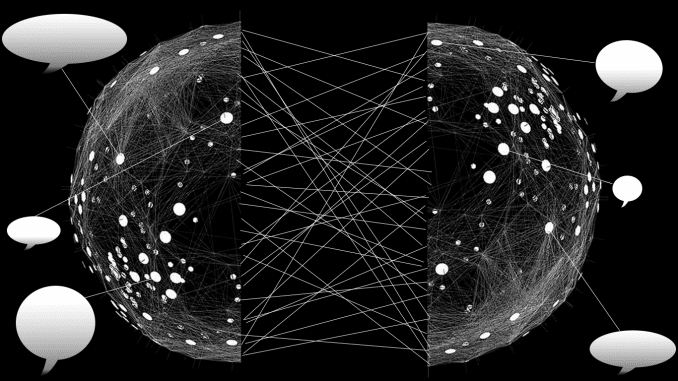
The promise of the internet was connection—a global village where ideas could flow freely across borders, cultures, and ideologies. Instead, we’ve witnessed the emergence of digital echo chambers that reinforce existing beliefs while filtering out contradictory viewpoints. This phenomenon, known as digital polarization, has become one of the most pressing challenges of our interconnected world.
Anúncios
Digital polarization refers to the increasing ideological distance between groups in online spaces, where algorithmic curation and selective exposure create isolated information environments. Unlike traditional media landscapes, digital platforms use sophisticated algorithms that learn our preferences and continuously serve content that aligns with our existing worldviews. This creates a feedback loop that strengthens our convictions while simultaneously distancing us from those who think differently.
The consequences extend far beyond our social media feeds. Digital polarization influences democratic processes, shapes public discourse, affects mental health, and even impacts our ability to address global challenges that require collective action. Understanding how we arrived at this point—and more importantly, how we might break free from these echo chambers—has never been more critical.
Anúncios
📱 The Architecture of Algorithmic Bubbles
Social media platforms operate on a simple principle: engagement equals revenue. The longer users stay on a platform, the more advertisements they see, and the more profitable the platform becomes. This business model has profound implications for the type of content that gets amplified.
Algorithms prioritize content that generates strong emotional responses—outrage, fear, anger, and even joy—because these emotions drive engagement. Studies have shown that content expressing moral outrage spreads faster and further than neutral or balanced perspectives. This creates an inherent bias toward divisive content, even when platforms claim neutrality.
How Recommendation Systems Narrow Our Worldview
YouTube’s recommendation algorithm provides a perfect case study. Research has demonstrated that the platform’s suggestions often lead users down increasingly extreme content pathways. Someone watching a mainstream political video might gradually be recommended more partisan content, then conspiracy theories, creating a radicalization pipeline that happens subtly over time.
Facebook’s News Feed algorithm similarly prioritizes content from sources we’ve previously engaged with, creating a personalized reality where certain topics, perspectives, and news sources dominate while others become virtually invisible. Twitter’s trending topics and TikTok’s For You page operate on similar principles, each contributing to the fragmentation of our shared information landscape.
The personalization isn’t inherently problematic—having relevant content saves time and improves user experience. The issue arises when personalization becomes so refined that it eliminates exposure to diverse viewpoints, creating what legal scholar Cass Sunstein called “information cocoons.”
🧠 The Psychology Behind Our Digital Tribes
Digital polarization doesn’t occur in a technological vacuum; it exploits fundamental aspects of human psychology. Understanding these psychological mechanisms helps explain why echo chambers are so powerful and difficult to escape.
Confirmation Bias in the Digital Age
Confirmation bias—our tendency to seek information that confirms existing beliefs—predates the internet. However, digital platforms supercharge this cognitive tendency by making it effortless to find supporting evidence for virtually any viewpoint. Where previous generations might have encountered conflicting perspectives simply through limited media options, today we can curate entirely personalized information diets.
Social identity theory explains another dimension of digital polarization. Humans derive part of their self-concept from group membership, and online spaces have created new opportunities for tribal affiliation. Political ideologies, conspiracy theories, lifestyle choices, and consumer preferences all become identity markers that define in-groups and out-groups.
The Illusion of Asymmetric Insight
Research shows that polarized groups believe they understand their opponents better than their opponents understand them—a phenomenon called the “illusion of asymmetric insight.” In digital spaces, this manifests as assuming the worst intentions from opposing viewpoints while attributing the best motivations to our own side. Comment sections become battlegrounds where nuance dies and caricatures thrive.
The anonymity and physical distance provided by digital communication lower inhibitions, making people more likely to express extreme views they might moderate in face-to-face interactions. This “online disinhibition effect” contributes to the nastiness and absolutism that characterizes much online political discourse.
⚖️ Real-World Consequences of Digital Division
The effects of digital polarization extend well beyond online arguments. They manifest in tangible ways that affect democratic institutions, social cohesion, and individual well-being.
Democratic Degradation and Political Dysfunction
When citizens inhabit different information realities, democratic deliberation becomes nearly impossible. We can’t debate solutions if we can’t agree on basic facts. Digital polarization has contributed to decreased trust in institutions, increased partisan animosity, and political gridlock in many democracies.
Elections become more contentious when voters receive fundamentally different information about candidates, policies, and current events. The 2016 US presidential election demonstrated how targeted misinformation could exploit existing divisions, while Brexit revealed how digital campaigns could mobilize polarized constituencies around competing visions of national identity.
Beyond elections, polarization affects governance. Legislators face pressure from increasingly extreme primary electorates radicalized in online echo chambers, making compromise politically dangerous. The center struggles to hold as activists on both ends dominate online discourse, creating a distorted impression of public opinion that doesn’t reflect the more moderate views of most citizens.
The Mental Health Toll of Constant Conflict
Living in a polarized digital environment takes a psychological toll. Studies link heavy social media use to increased anxiety, depression, and feelings of alienation. The constant exposure to outrage, conflict, and crisis—what researchers call “doomscrolling”—creates a distorted perception of threat that elevates stress hormones and undermines well-being.
Relationships suffer when political differences that once seemed manageable become unbridgeable divides. Families fracture over political disagreements amplified by partisan media ecosystems. Friendships dissolve when online interactions reveal irreconcilable differences that might have remained dormant in previous eras with less pervasive political content.
🔍 Recognizing When You’re in an Echo Chamber
The first step toward breaking free from digital polarization is recognizing when you’re in an echo chamber. This requires honest self-reflection about your media consumption patterns and the diversity of perspectives you encounter.
Ask yourself these diagnostic questions:
- Do you regularly encounter viewpoints that challenge your assumptions, or does most content you see confirm what you already believe?
- Can you accurately articulate opposing viewpoints in ways their advocates would recognize as fair?
- Do you follow, read, or watch sources from across the ideological spectrum?
- When you see content from the “other side,” is your immediate reaction dismissal or curiosity?
- Have your views on major issues become more extreme or more nuanced over the past year?
- Do you view people with different political opinions as fundamentally good people with different priorities, or as morally deficient?
If your media diet consists primarily of sources that validate your existing worldview, if you can’t articulate opposing arguments charitably, or if you’ve noticed your positions hardening rather than evolving, you’re likely experiencing some degree of echo chamber effects.
🛠️ Practical Strategies to Escape Digital Polarization
Breaking free from echo chambers requires intentional effort. The algorithms won’t do it for you—they’re designed to give you more of what you’ve already engaged with. Here are evidence-based strategies for diversifying your information diet and reducing polarization’s effects.
Curate Your Feed Deliberately
Take active control of your information sources. Follow accounts, pages, and channels that represent diverse viewpoints, including perspectives you disagree with. The goal isn’t to fill your feed with content that makes you angry, but to ensure you’re exposed to the strongest versions of different arguments.
Use tools that help break algorithmic bubbles. RSS readers allow you to create custom news feeds without algorithmic curation. Newsletter subscriptions deliver content directly to your inbox, bypassing platform algorithms. Podcast apps and reading lists let you intentionally diversify your media consumption.
Practice Intellectual Humility
Adopt what psychologists call a “scout mindset” rather than a “soldier mindset.” Instead of defending existing beliefs against all challenges, approach disagreements as opportunities to refine your understanding. This doesn’t mean abandoning your values, but recognizing that most complex issues have legitimate considerations on multiple sides.
Before sharing content that confirms your existing beliefs, pause and ask: Is this accurate? Is it representative? Could there be important context I’m missing? Am I sharing this because it’s informative or because it makes the other side look bad?
Seek Out Bridge-Builders and Nuanced Voices
Some commentators, journalists, and thinkers specialize in bridging divides and presenting multiple perspectives fairly. These voices might seem less exciting than partisan warriors, but they provide more accurate maps of our complex reality. Organizations like AllSides, Ground News, and The Flip Side explicitly present news from multiple ideological angles.
🌉 Building Bridges in a Divided Digital World
Individual action matters, but addressing digital polarization also requires collective and structural changes. Platform design choices, media literacy education, and cultural norms all play crucial roles.
The Role of Platform Responsibility
Technology companies are increasingly acknowledging their role in digital polarization. Some platforms have experimented with friction—small delays before sharing that encourage users to read articles rather than just headlines, or prompts asking if you want to review a tweet before posting something potentially inflammatory.
Algorithm transparency could help users understand why they’re seeing particular content. Giving users more control over their algorithmic feeds, including options to prioritize diverse perspectives or chronological rather than engagement-optimized ordering, represents another promising direction.
Strengthening Media Literacy
Education systems must adapt to prepare citizens for navigating complex information environments. Media literacy programs that teach critical evaluation of sources, recognition of manipulation techniques, and understanding of algorithmic curation should be standard parts of curriculum from elementary school through higher education.
Adults need these skills too. Community workshops, library programs, and online courses can help people of all ages develop the competencies needed to navigate polarized digital landscapes effectively.
💡 Finding Hope in Human Connection
Despite the challenges, there are reasons for optimism. Awareness of digital polarization has grown dramatically in recent years. People across the political spectrum express frustration with toxic online discourse and hunger for more constructive dialogue.
Face-to-face interactions remain powerful antidotes to digital division. When we encounter people as full human beings rather than avatars representing opposing ideologies, our natural empathy often overcomes partisan divides. Community organizations, local governance, and shared activities create contexts where people collaborate across differences toward common goals.
The key is recognizing that breaking echo chambers requires ongoing effort. It’s not a one-time fix but a continuous practice of intellectual humility, curiosity, and deliberate exposure to diverse perspectives. Each small choice—to read an article from an unfamiliar source, to engage charitably with someone you disagree with, to share nuanced content rather than inflammatory memes—contributes to a healthier information ecosystem.
🚀 Moving Forward Together
Digital polarization is shaping our world in profound ways, fragmenting our shared reality and making collective problem-solving more difficult. The algorithms that govern our information flows prioritize engagement over understanding, outrage over nuance, and confirmation over challenge.
Yet we’re not powerless. By understanding the mechanisms driving polarization—the algorithmic architecture, the psychological vulnerabilities it exploits, and the social consequences it produces—we can make more informed choices about our digital lives. We can curate diverse information sources, practice intellectual humility, and seek out bridge-builders rather than warriors.
The stakes are high. Climate change, pandemic response, economic inequality, and countless other challenges require cooperation across differences. We cannot afford to remain trapped in echo chambers that prevent us from finding common ground. Breaking free demands effort, but the alternative—an increasingly fractured society unable to address shared challenges—is far worse.
Our digital tools are powerful, but they remain tools. We choose how to use them. By making conscious decisions about our information consumption, by engaging with empathy across divides, and by demanding better from the platforms that shape our discourse, we can begin to bridge the gaps that separate us. The echo can be broken, but only if we’re willing to listen to voices beyond our own reflections.
