
Anúncios
The power of collective human behavior shapes our world in ways we rarely pause to consider, from viral trends to social movements that transform societies.
Every day, millions of people make decisions influenced not by individual reasoning alone, but by the invisible forces of social contagion and group dynamics. Whether it’s adopting a new technology, changing political opinions, or participating in a social movement, our behaviors ripple through networks with surprising speed and impact. Understanding these mechanisms isn’t just academic curiosity—it’s essential for anyone seeking to influence change, build communities, or simply comprehend the world around them.
Anúncios
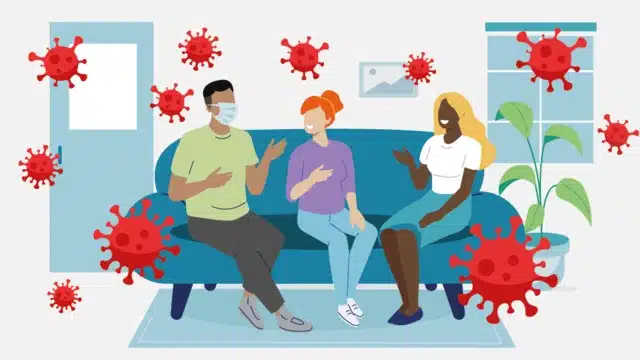
Social contagion refers to the phenomenon where behaviors, emotions, and ideas spread through populations much like infectious diseases spread through physical contact. Unlike biological contagion, however, social contagion travels through social networks, conversations, observations, and increasingly, digital platforms. This concept has become more relevant than ever in our hyperconnected world, where a single post can reach millions within hours.
🧠 The Psychology Behind Social Contagion
At its core, social contagion exploits fundamental aspects of human psychology. We are social creatures who evolved to survive in groups, and our brains are hardwired to pay attention to what others around us are doing. This evolutionary adaptation once helped our ancestors identify food sources, avoid dangers, and strengthen tribal bonds. Today, these same mechanisms drive everything from fashion trends to political polarization.
Anúncios
Research in behavioral psychology has identified several key factors that make individuals susceptible to social influence. Social proof stands as one of the most powerful—when we’re uncertain about how to behave, we look to others for guidance. This explains why restaurants with long lines attract even more customers, and why products labeled as “bestsellers” fly off shelves faster than identical items without that designation.
Another critical element is emotional contagion, the phenomenon where we unconsciously mimic and synchronize with the emotions of those around us. Studies using facial recognition technology and physiological measurements have demonstrated that emotions spread through crowds with remarkable speed. When someone smiles at you, you’re more likely to smile back. When panic erupts in a crowd, it spreads exponentially faster than rational assessment of the actual danger.
The Role of Mirror Neurons and Empathy
Neuroscience has revealed that mirror neurons—brain cells that fire both when we perform an action and when we observe someone else performing that same action—play a crucial role in social contagion. These neurons create a neural bridge between individuals, allowing us to literally feel what others are experiencing. This biological mechanism explains why watching someone yawn makes us yawn, why we wince when we see someone get hurt, and why emotions spread so readily through groups.
This empathetic connection becomes amplified in group settings where multiple people exhibit the same behavior or emotion simultaneously. The cumulative effect creates a feedback loop: as more people adopt a behavior, it becomes increasingly normal and expected, which in turn motivates even more people to conform.
📱 Digital Age Amplification of Social Contagion
The internet and social media have fundamentally transformed how social contagion operates, accelerating its speed and expanding its reach beyond anything possible in previous human history. A tweet can circle the globe in minutes. A video can accumulate millions of views overnight. Ideas that might have taken decades to spread across continents now propagate instantaneously across digital networks.
Platform algorithms designed to maximize engagement inadvertently create echo chambers that intensify social contagion effects. When we see content that our connections have liked, shared, or commented on, we receive powerful social signals about what’s important, interesting, or acceptable. These signals carry weight precisely because they come from our social networks—people we know, trust, or admire.
The virality mechanisms built into social platforms essentially weaponize social contagion principles. Features like share counts, like buttons, and trending topics create visible markers of social proof, signaling to users what deserves their attention. This creates cascading effects where popular content becomes exponentially more popular simply because it’s already popular—a phenomenon known as cumulative advantage.
The Dark Side of Digital Social Contagion
While digital social contagion can spread positive movements and valuable information, it also amplifies misinformation, polarization, and harmful behaviors. False news stories spread faster and reach more people than accurate information, according to research from MIT. This occurs partly because false information tends to be more novel and emotionally provocative—qualities that drive sharing behavior.
Cyberbullying, eating disorders, and even self-harm behaviors have been documented spreading through social contagion mechanisms on digital platforms. Vulnerable populations, particularly adolescents, appear especially susceptible to these negative contagion effects, raising serious questions about platform design and social responsibility.
🎯 Tipping Points and Critical Mass in Group Behavior
Not all social contagion efforts succeed. Many potential trends, movements, and behavioral changes fizzle out before gaining traction. Understanding why some ideas spread while others don’t requires examining the concept of tipping points—the critical threshold at which a behavior or idea becomes self-sustaining and spreads rapidly through a population.
Malcolm Gladwell popularized this concept, but researchers have been studying threshold models of collective behavior for decades. The fundamental insight is that different individuals have different thresholds for adopting new behaviors. Some people are innovators who embrace new ideas immediately. Others are early adopters who join once a few pioneers have validated the concept. The majority wait until a behavior becomes mainstream before participating.
Mathematical models suggest that once approximately 10-25% of a population adopts a behavior, it reaches critical mass and becomes likely to spread to the majority. This explains why social movements often appear to explode suddenly after years of slow growth—they’ve finally reached the tipping point where momentum becomes self-sustaining.
Network Structure and Influence Patterns
The structure of social networks significantly impacts how contagion spreads. Highly connected individuals—often called influencers or opinion leaders—play outsized roles in disseminating ideas. However, recent research suggests that the network structure itself matters more than individual influence. Ideas spreading through networks with many weak ties (acquaintances) tend to reach more diverse audiences than those confined to tight-knit groups with strong ties.
This has important implications for anyone seeking to create social change or viral content. Targeting well-connected individuals can accelerate spread, but ensuring the message reaches across different social clusters prevents it from remaining trapped in echo chambers.
💡 Harnessing Social Contagion for Positive Change
Understanding social contagion mechanisms enables us to harness these forces for beneficial purposes. Public health campaigns have successfully used social contagion principles to increase vaccination rates, reduce smoking, and promote healthy behaviors. By making desired behaviors socially visible and normative, these campaigns leverage our natural tendency to conform to perceived group norms.
Environmental movements have employed similar strategies, using social contagion to spread sustainable practices. When people see their neighbors installing solar panels or their friends adopting plant-based diets, they receive powerful signals that these behaviors are normal, desirable, and achievable. The visibility of the behavior becomes crucial—it’s difficult for social contagion to occur around invisible actions.
Creating Contagious Content and Movements
Several key principles emerge from research on successful social contagion:
- Emotional resonance: Content that evokes strong emotions—whether joy, anger, inspiration, or surprise—spreads more readily than neutral information
- Social currency: People share things that make them look good, knowledgeable, or connected to important issues
- Practical value: Useful information that helps people solve problems or improve their lives gets passed along
- Storytelling: Narratives spread more effectively than abstract facts or statistics
- Public visibility: Behaviors and ideas that are easily observable spread faster than invisible ones
- Triggers: Ideas linked to frequent environmental cues maintain ongoing activation in people’s minds
Successful movements combine these elements strategically. The ice bucket challenge for ALS awareness succeeded because it was highly visible, emotionally engaging, tied to a worthy cause, and included a built-in mechanism for nomination that spread it through social networks. Each participant became both a recipient and a transmitter of the social contagion.
🔬 Scientific Studies Revealing Group Behavior Patterns
Decades of research have illuminated fascinating patterns in how groups behave collectively. Solomon Asch’s conformity experiments in the 1950s demonstrated that people will deny the evidence of their own eyes to conform to group consensus. Stanley Milgram’s obedience studies revealed how group authority structures override individual moral judgments. These classic studies established that group contexts fundamentally alter individual behavior.
More recent research has used big data and digital trace data to study social contagion at unprecedented scales. Studies analyzing millions of social media users have mapped how emotions, behaviors, and information spread through networks. These investigations have revealed that social contagion extends far beyond obvious influences—everything from sleep patterns to obesity rates show contagion effects within social networks.
The Three Degrees of Influence Rule
Perhaps one of the most striking findings from network science research is the “three degrees of influence” rule discovered by Nicholas Christakis and James Fowler. Their studies demonstrated that behaviors and states spread through social networks up to three degrees of separation—meaning your friend’s friend’s friend can influence you, even if you’ve never met that person.
This finding has profound implications. It means that your actions ripple through your social network much further than you realize. When you quit smoking, adopt a healthier diet, or become politically engaged, you’re not just affecting yourself or even just your immediate friends—you’re potentially influencing people three degrees removed from you in the social network.
⚖️ Ethical Considerations and Responsibility
With great power comes great responsibility, and understanding social contagion mechanisms raises important ethical questions. Marketers, political operatives, and platform designers already employ these principles—sometimes with concerning results. The Cambridge Analytica scandal revealed how social network data could be weaponized to influence political behavior at scale.
Anyone seeking to harness social contagion must grapple with questions of manipulation versus persuasion. When does legitimate influence become unethical manipulation? How transparent should contagion efforts be? What responsibility do influencers and platforms bear for the consequences of content they spread?
These questions become especially acute when considering vulnerable populations. Children and adolescents, whose brains are still developing and whose need for social acceptance peaks during teenage years, are particularly susceptible to social contagion effects. This raises concerns about everything from social media design to marketing practices targeting young people.
🌊 The Future of Social Contagion in an Interconnected World
As our world becomes increasingly interconnected, social contagion will only become more powerful and consequential. Emerging technologies like virtual reality and the metaverse promise to create even more immersive social environments where contagion effects might intensify. Artificial intelligence systems designed to personalize content could either fragment us into isolated bubbles or create unprecedented global consensus—depending on how they’re designed and deployed.
Understanding these mechanisms becomes essential not just for marketers and activists, but for anyone navigating modern society. Digital literacy increasingly means understanding how our social environments shape our beliefs, behaviors, and decisions. Recognizing when we’re being influenced by social contagion doesn’t necessarily mean resisting it—sometimes the crowd is right—but it does mean making more informed, conscious choices.
The power of the crowd cuts both ways. Social contagion can spread hatred and misinformation, but it can also mobilize millions for justice, accelerate beneficial innovations, and create positive social change. The same mechanisms that can trigger bank runs and stock market crashes can also produce incredible acts of collective generosity and cooperation.
🎭 Building Immunity Against Negative Contagion
Just as we can build physical immunity to diseases, we can develop psychological resilience against harmful social contagion. Critical thinking skills serve as a first line of defense—questioning information sources, examining evidence, and resisting the urge to share without verification all help slow the spread of misinformation.
Diversifying our social networks and information sources helps counteract echo chamber effects. When we’re exposed to diverse perspectives and information streams, we become less susceptible to any single contagion current sweeping through a homogeneous group. This doesn’t mean abandoning our communities, but rather ensuring we’re not imprisoned by them.
Mindfulness practices and emotional regulation skills help us recognize when we’re being swept up in collective emotions. That pause between feeling an emotion and acting on it creates space for conscious choice rather than automatic contagion-driven behavior.
🚀 Leveraging Collective Intelligence
While much discussion of crowd behavior focuses on its dangers, crowds also possess remarkable wisdom when conditions are right. The “wisdom of crowds” phenomenon demonstrates that diverse groups often make better predictions and decisions than even expert individuals, provided certain conditions are met: diversity of opinion, independence of thought, decentralization, and effective aggregation mechanisms.
Platforms and communities that harness these principles can channel social contagion toward collective intelligence rather than mob mentality. Prediction markets, certain crowdsourcing platforms, and well-designed deliberative forums demonstrate how group behavior can be structured to produce insight rather than just conformity.
The challenge lies in creating social contexts that preserve individual judgment while leveraging collective wisdom—environments where information cascades and social proof enhance rather than override critical thinking.
Understanding social contagion and group behavior empowers us to navigate our interconnected world more effectively, harness collective action for positive purposes, and resist manipulation. The crowd’s power is neither inherently good nor bad—it’s a fundamental feature of human social life that we must learn to work with consciously and deliberately. As we move deeper into an age of unprecedented connectivity, this understanding becomes not just valuable but essential for thriving individually and collectively. The question isn’t whether we’ll be influenced by social contagion—we already are—but whether we’ll be conscious participants in shaping how these powerful forces unfold.
