
Anúncios
Learning isn’t just about how much you study—it’s about when and how you review. Understanding memory science can transform your educational journey forever. 🧠
Every student, professional, and lifelong learner faces the same frustrating challenge: spending hours studying only to forget most of the information within days or weeks. This isn’t a personal failing—it’s how human memory naturally works. The good news? Scientists have uncovered powerful techniques that work with your brain’s natural rhythms rather than against them.
Anúncios
The concepts of forgetting curves and spaced repetition represent two of the most scientifically validated approaches to learning and memory retention. When properly understood and applied, these methods can dramatically improve how much information you retain while actually reducing the total time you spend studying. This article explores the neuroscience behind memory, practical implementation strategies, and how to build a learning system that delivers lasting results.
The Science Behind Why We Forget 🔬
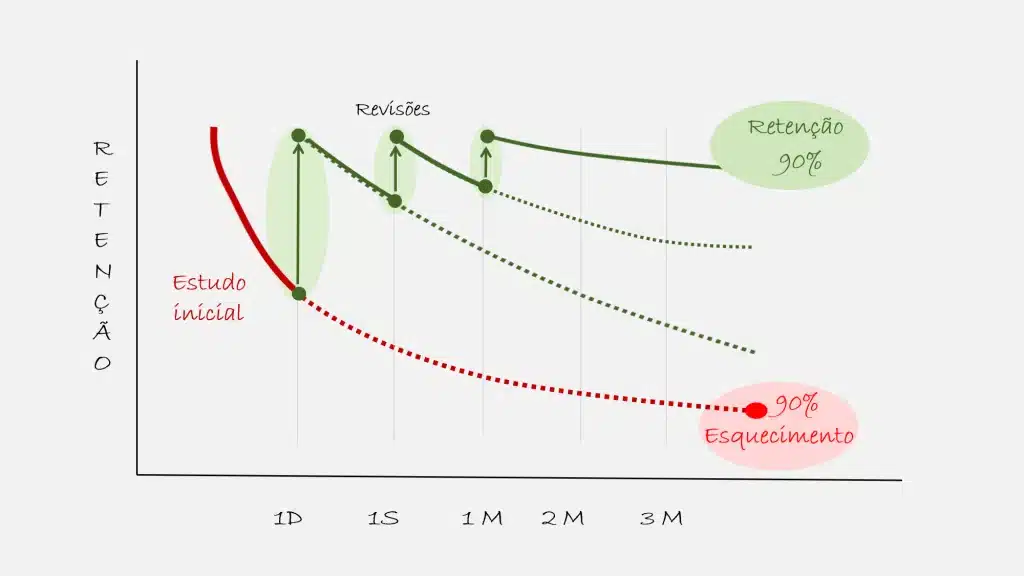
German psychologist Hermann Ebbinghaus revolutionized our understanding of memory in the 1880s through meticulous self-experimentation. He memorized nonsense syllables and tracked how quickly he forgot them, discovering what we now call the “forgetting curve.” His research revealed that without reinforcement, we forget approximately 50% of newly learned information within one hour, and up to 90% within a month.
Anúncios
This rapid memory decay isn’t a design flaw—it’s actually an evolutionary feature. Your brain constantly evaluates which information deserves long-term storage based on how frequently you access it. Information that seems irrelevant gets pruned away to make room for more important data. This explains why you can remember song lyrics from years ago but struggle to recall what you studied last week.
The forgetting curve follows a logarithmic pattern, meaning memory loss is steepest immediately after learning, then gradually levels off. However, each time you successfully recall information, you reset and flatten this curve. The memory trace becomes stronger, and the rate of forgetting slows down significantly. This neurological phenomenon forms the foundation for effective learning strategies.
Understanding Spaced Repetition: The Memory Multiplication Effect
Spaced repetition leverages the forgetting curve by strategically timing review sessions. Instead of cramming information in one intensive session, you review material at increasing intervals just before you’re likely to forget it. This approach forces your brain to work harder during retrieval, which paradoxically strengthens the memory more than easy, immediate recall.
The technique works because of a principle called “desirable difficulty.” When retrieval requires effort—when you need to pause and think before remembering—the act of successfully recalling information creates stronger neural pathways. It’s similar to how lifting heavier weights builds more muscle than repeatedly lifting something light.
Research demonstrates that spaced repetition can reduce study time by 50% while improving retention by 200% or more compared to traditional study methods. The optimal spacing intervals typically follow this pattern: review after one day, then three days, then one week, then two weeks, then one month, with intervals continuing to expand based on how easily you recall the information.
The Optimal Timing Formula
While general guidelines exist, the most effective spacing intervals are personalized based on your performance. Modern spaced repetition systems use algorithms that adjust timing based on whether you successfully recalled the information and how difficult that recall was. If you easily remember something, the next interval extends further. If you struggle or forget, the interval shortens.
A basic spacing schedule might look like this:
- First review: 1 day after initial learning
- Second review: 3 days after first review
- Third review: 7 days after second review
- Fourth review: 14 days after third review
- Fifth review: 30 days after fourth review
- Subsequent reviews: Increasingly longer intervals (2-6 months)
This schedule isn’t rigid—it adapts based on the difficulty of the material and your mastery level. Complex concepts might require shorter intervals initially, while simpler facts can extend to longer gaps more quickly.
Building Your Spaced Repetition System 📚
Implementing spaced repetition doesn’t require expensive software or complicated setups. You can start with physical flashcards organized into boxes representing different review schedules—a method called the Leitner system. However, digital tools offer significant advantages by automatically calculating optimal intervals and ensuring you never miss a review session.
The most effective approach combines several elements: active recall (testing yourself rather than passively reviewing), spaced intervals, and immediate feedback. When creating study materials, focus on question-and-answer formats rather than simply rereading notes. The act of retrieving information—even when you struggle—builds stronger memories than passive recognition.
Digital Tools That Automate the Process
Several applications have been specifically designed to implement spaced repetition algorithms. Anki stands out as the most popular and powerful option, offering complete customization and supporting text, images, audio, and even video on flashcards. While the interface isn’t the most modern, its flexibility and cross-platform synchronization make it a favorite among medical students, language learners, and academics.

For language learning specifically, apps like Memrise and Duolingo incorporate spaced repetition into their core design, making the technique accessible even to those unfamiliar with the underlying science. These platforms gamify the learning process while maintaining the essential review timing that makes spaced repetition effective.
RemNote and Supermemo represent more advanced options for serious learners. Supermemo pioneered the spaced repetition algorithm and offers the most sophisticated scheduling system available, though with a steeper learning curve. RemNote integrates spaced repetition directly into note-taking, automatically converting your notes into flashcards and scheduling reviews.
Creating Effective Learning Materials ✍️
The quality of your study materials directly impacts retention success. Poorly designed flashcards undermine even perfect spacing intervals. The most effective learning materials follow several key principles that align with how memory actually works.
First, break complex information into atomic units—the smallest possible standalone pieces of knowledge. Instead of one card asking “Explain the causes of World War I,” create separate cards for each specific cause. This principle, called “minimum information principle,” prevents cognitive overload and allows precise identification of knowledge gaps.
Second, make information personally meaningful by connecting new knowledge to things you already understand. Instead of memorizing abstract facts, create cards that relate concepts to your life, use vivid imagery, or tell stories. Memory research consistently shows that meaningful information is retained far better than arbitrary facts.
The Art of Question Formulation
How you phrase questions matters tremendously. Effective cards prompt active thinking rather than pattern recognition. Avoid questions with multiple correct answers or ambiguous phrasing. Instead of “What are some benefits of exercise?” ask “How does aerobic exercise affect hippocampus volume?”
Use cloze deletions for complex information that contains multiple testable elements. A cloze deletion replaces key words with blanks: “The hippocampus, located in the [blank] temporal lobe, is essential for [blank] memory formation.” This format allows you to test multiple facts within their natural context.
Include images whenever possible—visual information is processed 60,000 times faster than text and creates more memorable associations. For language learning, pair vocabulary with relevant images rather than translations. For technical subjects, include diagrams, charts, or photographs that reinforce the concept.
Common Mistakes That Sabotage Learning Progress ⚠️
Many learners enthusiastically adopt spaced repetition but inadvertently undermine its effectiveness through preventable errors. Recognizing these pitfalls helps you avoid wasting time and frustration.
The most common mistake is creating too many cards too quickly. Enthusiasm leads to adding hundreds of flashcards, resulting in overwhelming daily review burdens. Start small—10-20 new cards daily is manageable for most people. Remember that each new card creates a future review obligation. It’s better to learn less material thoroughly than to superficially cover more ground.
Another frequent error involves treating spaced repetition as a replacement for initial learning rather than a reinforcement tool. Spaced repetition optimizes review timing, but it doesn’t replace the need for quality initial exposure to material. First, understand the concept through reading, lectures, or practice. Then use spaced repetition to cement that understanding into long-term memory.
Many learners also fail to edit or delete cards. As you progress, some cards become too easy, contain errors, or are simply no longer relevant. Regularly reviewing and refining your deck maintains quality and prevents wasted time on obsolete material.
The Consistency Challenge
Spaced repetition’s power comes from consistent daily practice. Missing reviews doesn’t just delay progress—it allows the forgetting curve to reassert itself, requiring more total review time to compensate. Even 10-15 minutes daily produces better results than hour-long weekend cramming sessions.
Build your review sessions into existing routines: during breakfast, on your commute, or before bed. The specific time matters less than consistency. Many successful learners report that viewing daily reviews as non-negotiable—like brushing teeth—helps establish the habit until it becomes automatic.
Advanced Techniques for Maximum Retention 🚀
Once you’ve mastered basic spaced repetition, several advanced techniques can further enhance retention and reduce study time. These methods build on the fundamental principles while adding layers of sophistication.
Interleaving involves mixing different subjects or topics within the same study session rather than blocking identical problems together. While this feels more difficult initially, it improves your ability to distinguish between concepts and apply knowledge flexibly. Instead of practicing 20 similar math problems consecutively, alternate between different problem types.
Elaborative interrogation means constantly asking “why” and “how” questions about the material you’re learning. Don’t just memorize that the mitochondria is the powerhouse of the cell—understand why its structure enables that function and how cellular respiration actually works. This deeper processing creates richer memory networks.
The generation effect describes the phenomenon where information you produce yourself is remembered better than information you passively receive. Before checking the answer on a flashcard, force yourself to generate a response—even if you’re uncertain. The act of generation, even incorrect generation followed by correction, strengthens memory more than immediate viewing of correct answers.
Combining Spaced Repetition with Other Learning Methods
Spaced repetition works best as part of a comprehensive learning system. Combine it with active practice, where you apply knowledge to solve problems or create something new. For language learning, this means conversing with native speakers, not just reviewing vocabulary. For mathematics, this means solving novel problems, not just memorizing formulas.
The Feynman Technique pairs beautifully with spaced repetition: explain concepts in simple language as if teaching someone unfamiliar with the topic. Gaps in your explanation reveal knowledge weaknesses, which you can then convert into targeted flashcards for spaced review.
Sleep plays a crucial role in memory consolidation. The rehearsal that occurs during sleep—particularly during REM and slow-wave sleep—strengthens memories formed during the day. Reviewing difficult material shortly before sleep may enhance consolidation, though more research is needed to confirm optimal timing.
Measuring Progress and Adjusting Your Approach 📊
Effective learning requires periodic assessment and adjustment. Most spaced repetition software provides statistics showing retention rates, daily review volume, and learning velocity. These metrics help you identify problems before they become overwhelming.
Watch your retention rate—the percentage of cards you successfully recall during reviews. Healthy retention typically ranges between 85-95%. Rates below 80% suggest your intervals are too long, your cards are poorly designed, or you need to improve initial learning before adding cards. Rates above 95% indicate overly conservative intervals—you’re reviewing more than necessary.
Monitor your daily review load. If reviews consistently exceed 30-45 minutes, you’re probably adding new cards too quickly. Reduce your daily new card limit until reviews stabilize at a manageable level. Remember that temporary increases are normal when you first start or after vacations—the load will decrease as you catch up.
Long-Term Maintenance and Knowledge Gardens
View your spaced repetition system as a knowledge garden requiring ongoing cultivation. Regularly weed out outdated or poorly formulated cards. Add new connections between related concepts. Update cards with improved phrasing or additional context as your understanding deepens.
Some learners create “parent” and “child” cards to maintain both detailed and overview-level knowledge. Parent cards test general principles, while child cards explore specific examples or applications. This hierarchy helps you understand both the forest and the trees.
Real-World Applications Across Different Domains 🌍
Spaced repetition’s versatility makes it valuable across virtually every learning domain. Medical students use it to memorize thousands of facts, terminology, and diagnostic criteria. Many credit spaced repetition with making previously overwhelming material manageable, with some estimating it saved them hundreds of study hours during their training.
Language learners employ spaced repetition for vocabulary, grammar patterns, and pronunciation. The technique particularly shines for character-based languages like Chinese or Japanese, where thousands of symbols must be recognized automatically. Combining spaced repetition with immersion produces faster progress than either method alone.
Programmers use it to remember syntax, algorithms, design patterns, and API documentation across multiple languages. Rather than constantly googling basic commands, they internalize frequently-used information, allowing focus on higher-level problem-solving.
Even non-academic applications prove valuable. Musicians memorize pieces, chord progressions, and music theory. Professionals maintain industry knowledge, client details, or technical specifications. Parents teaching children benefit from structuring educational games around spaced repetition principles.
Transforming Your Relationship with Learning 💡
The real power of mastering forgetting curves and spaced repetition extends beyond improved test scores or faster skill acquisition. These techniques fundamentally change how you approach learning itself. Instead of viewing forgetting as failure, you recognize it as a natural process to be strategically managed.
This shift in perspective reduces learning anxiety. You don’t need a perfect memory or special talent—you need an effective system that works with your brain’s natural tendencies. The confidence this brings often motivates people to tackle subjects they previously considered beyond their capabilities.
Spaced repetition also develops metacognitive awareness—understanding how you think and learn. You become more attuned to what makes information memorable, how to break down complex topics, and when you genuinely understand something versus superficially recognizing it. These meta-skills transfer across all learning contexts.
Perhaps most importantly, efficient learning methods free time for deeper engagement with material. When memorization becomes manageable, you can focus on application, creativity, and critical thinking—the activities that make learning genuinely rewarding rather than merely necessary.
Starting Your Mastery Journey Today
Beginning with spaced repetition doesn’t require dramatic changes or expensive investments. Start today by choosing one subject you’re learning and creating 10-15 high-quality flashcards. Use a digital tool or even paper cards organized into review piles. Commit to reviewing daily for one month while gradually adding new material.
Focus first on establishing the habit rather than perfecting your system. Consistency matters more than optimization during the initial phase. As the routine becomes automatic, experiment with card formats, intervals, and integration with other learning methods.
Remember that spaced repetition is a long-term investment. Initial setup requires effort, and benefits accumulate gradually rather than appearing overnight. However, once your system is established, it becomes increasingly effortless to maintain while delivering compounding returns on your learning investment.
The science is clear: spaced repetition and understanding forgetting curves represent some of the most powerful tools available for effective learning. By working with your brain’s natural memory processes rather than fighting against them, you can achieve learning outcomes that once seemed impossible while actually reducing total study time. The question isn’t whether these techniques work—it’s whether you’ll take advantage of them to unlock your full learning potential. 🎓
