
Anúncios
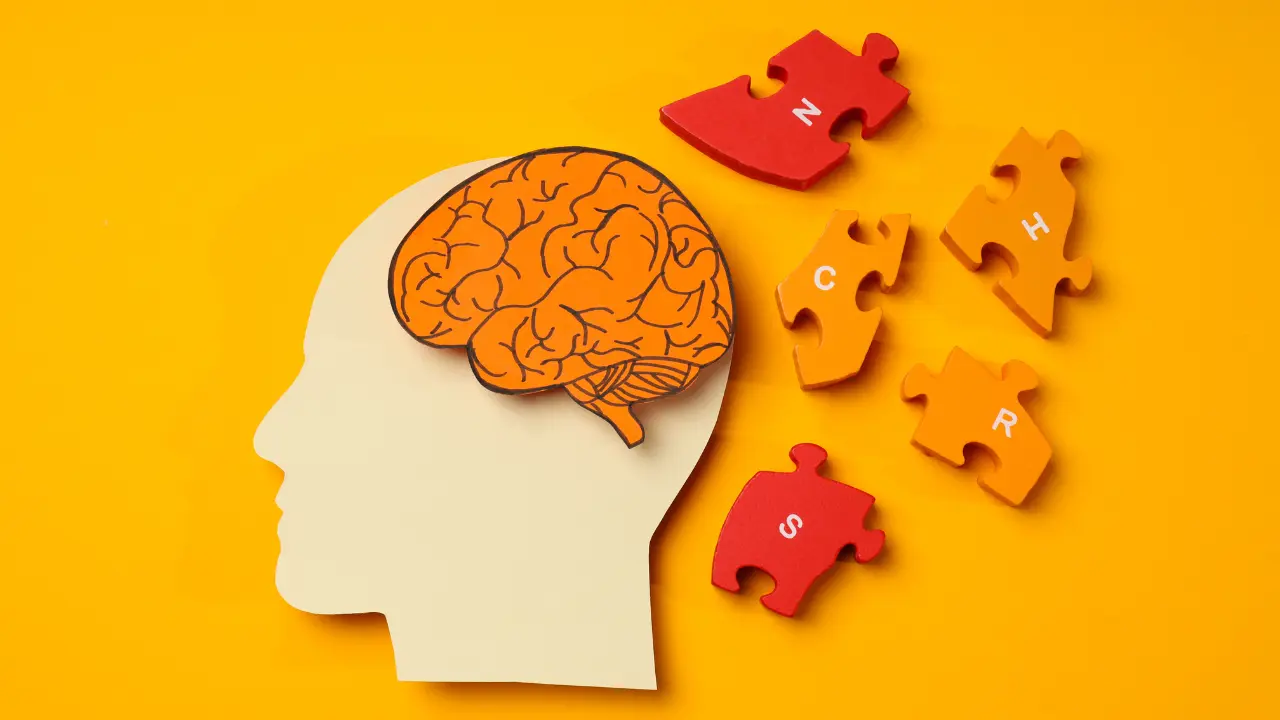
Memory shapes our identity, influences our decisions, and defines our reality. Yet, what we remember isn’t always what actually happened. 🧠
Our minds possess an extraordinary capacity to store, retrieve, and reconstruct experiences from the past. However, this remarkable ability comes with a fascinating vulnerability: our memories are far more malleable than we’d like to believe. The phenomenon of false recall and memory manipulation reveals that our brains don’t function like video cameras, faithfully recording every detail. Instead, they actively construct and reconstruct our past, sometimes filling gaps with information that never existed.
Anúncios
Understanding how false memories form and how our recollections can be manipulated has profound implications for psychology, neuroscience, criminal justice, and our daily lives. From eyewitness testimony in courtrooms to the reliability of childhood memories, the science of memory distortion challenges our assumptions about truth and perception.
The Architecture of Memory: How Our Brains Store Information
Before diving into false recall, we must first understand how memory actually works. Memory isn’t a single process but rather a complex system involving multiple brain regions and mechanisms working in concert.
Anúncios
The hippocampus serves as the brain’s memory consolidator, helping transfer information from short-term to long-term storage. The prefrontal cortex manages working memory and helps retrieve stored information. The amygdala processes emotional memories, which explains why emotionally charged events often feel more vivid and memorable.
Memory formation occurs in three distinct stages: encoding, storage, and retrieval. During encoding, our brains process sensory information and decide what’s worth remembering. Storage involves consolidating this information into neural networks. Retrieval is the process of accessing stored memories when needed.
Each time we recall a memory, we don’t simply replay a stored recording. Instead, we reconstruct the experience using scattered neural fragments, contextual cues, and sometimes unconscious assumptions about what “must have” happened. This reconstruction process creates opportunities for distortion.
The DRM Paradigm: Scientific Evidence of False Memory Creation 📊
One of the most compelling demonstrations of false memory comes from the Deese-Roediger-McDermott (DRM) paradigm, a laboratory experiment that reliably produces false memories in participants.
In this classic experiment, researchers present participants with lists of related words. For example, a list might include: bed, rest, awake, tired, dream, wake, snooze, blanket, doze, slumber. Notice what’s missing? The word “sleep” never appears on the list.
When later tested for recall, a significant percentage of participants confidently remember seeing the word “sleep” on the original list. They don’t just guess—they genuinely believe they encountered this word. Their confidence levels for this false memory often match their confidence in actual words from the list.
This phenomenon demonstrates how our brains use semantic associations and expectations to fill memory gaps. The missing word is so closely related to the presented words that our minds naturally incorporate it into the memory trace.
Why the DRM Effect Matters
The DRM paradigm isn’t just an academic curiosity. It reveals fundamental truths about memory construction that have real-world consequences. If researchers can implant false memories using simple word lists in controlled settings, imagine what might happen in complex, emotionally charged real-life situations.
The effect demonstrates that false memories aren’t necessarily the result of lying, brain damage, or psychological dysfunction. They’re a natural byproduct of how healthy brains process and store information.
The Misinformation Effect: How External Suggestions Alter Memory 💭
Elizabeth Loftus, one of psychology’s most influential memory researchers, pioneered studies on the misinformation effect—the phenomenon where exposure to misleading information after an event distorts memory of that event.
In her famous “car crash” experiments, participants watched videos of traffic accidents. Later, researchers asked some participants, “How fast were the cars going when they smashed into each other?” Others were asked, “How fast were the cars going when they hit each other?”
The subtle difference in wording—”smashed” versus “hit”—significantly affected participants’ speed estimates. Those who heard “smashed” reported higher speeds. More remarkably, when questioned a week later, those in the “smashed” group were more likely to falsely remember seeing broken glass at the accident scene, even though no broken glass appeared in the video.
This research demonstrates how post-event information can become integrated into our original memory, creating a blended recollection that feels authentic but contains fabricated elements.
Real-World Applications and Concerns
The misinformation effect has profound implications for eyewitness testimony. Leading questions from police investigators, conversations with other witnesses, media coverage, and even well-intentioned therapy can all introduce false elements into genuine memories.
Consider a witness to a crime who discusses the event with other witnesses before giving a formal statement. Each person’s account can influence others, creating a shared but partially false narrative that all witnesses sincerely believe.
Implanting Entirely False Memories: The Lost in the Mall Study 🛒
Perhaps most disturbing is research showing that entirely fabricated memories can be implanted in people’s minds. Loftus and her colleagues conducted the “Lost in the Mall” study, where they convinced participants that they had been lost in a shopping mall as children—an event that never actually occurred.
Researchers worked with participants’ family members to create plausible but false narratives about childhood mall incidents. They then asked participants to recall four childhood events: three real and one fabricated. About 25% of participants developed complete or partial false memories of being lost in the mall, adding sensory details and emotional content to the implanted scenario.
Follow-up studies have replicated this effect with other false scenarios, including:
- Taking a hot air balloon ride that never happened
- Meeting cartoon characters at theme parks (when no such meeting occurred)
- Witnessing demonic possession
- Committing crimes that were never perpetrated
These studies reveal that with the right combination of suggestion, social pressure, imagination exercises, and time, people can develop rich, detailed memories of events that exist only in the minds of researchers.
The Neural Mechanisms Behind False Memories 🔬
Neuroscience research has begun identifying the brain mechanisms underlying false memory formation. Neuroimaging studies show that true and false memories activate largely overlapping brain regions, which explains why false memories feel so genuine.
However, subtle differences do exist. True memories typically show stronger activation in sensory regions associated with actual perception, while false memories may show increased activity in areas related to semantic processing and conceptual thinking.
The hippocampus, critical for forming new memories, also plays a role in false memory generation. When the hippocampus incorrectly binds together elements from different experiences or combines actual memories with imagined events, false memories emerge.
Pattern Completion and Memory Distortion
Our brains use a process called pattern completion to efficiently retrieve memories from partial cues. When you smell fresh bread and suddenly remember your grandmother’s kitchen, pattern completion is at work.
While useful, this mechanism can produce false memories when the brain completes patterns with incorrect information. If environmental cues partially match multiple stored memories, the brain might retrieve elements from different experiences and blend them into a single, coherent but inaccurate memory.
Factors That Increase False Memory Susceptibility
Not everyone is equally prone to false memories. Research has identified several factors that increase susceptibility to memory distortion and false recall.
Age plays a significant role. Children and older adults show higher rates of false memory formation compared to young and middle-aged adults. Children’s developing brains have difficulty distinguishing between imagined and experienced events, while cognitive decline in older adults affects memory monitoring abilities.
Individual differences in cognitive style also matter. People with higher scores on measures of dissociation, vivid imagery, and suggestibility tend to be more prone to false memories. Conversely, those with better source monitoring abilities—the capacity to accurately identify where memories originated—show greater resistance to false recall.
Stress and trauma can paradoxically both enhance and distort memory. While emotionally arousing events are often well-remembered, extreme stress can fragment memory encoding, creating gaps that might later be filled with incorrect information.
The Danger Zone: False Memories in the Justice System ⚖️
Perhaps nowhere are false memories more consequential than in the criminal justice system. Eyewitness testimony heavily influences juries, yet research consistently shows that eyewitness identification is far less reliable than most people assume.
The Innocence Project has documented hundreds of wrongful convictions overturned by DNA evidence. In approximately 70% of these cases, eyewitness misidentification played a role. Many of these witnesses weren’t lying—they genuinely but incorrectly remembered the defendant as the perpetrator.
Several factors contribute to false identification:
- Weapon focus: When a weapon is present, witnesses focus on the threat rather than the perpetrator’s face
- Cross-race effect: People show reduced accuracy identifying faces of other races
- Stress and arousal: High-stress situations impair encoding of facial details
- Post-event information: Media coverage and police procedures can contaminate original memories
- Confidence malleability: Witness confidence can increase through suggestion, even when accuracy doesn’t improve
Improving Eyewitness Procedures
Understanding false memory has led to reforms in how law enforcement conducts lineups and interviews. The cognitive interview technique, which avoids leading questions and encourages witnesses to recall events in multiple ways, produces more accurate testimony.
Sequential lineups, where suspects are shown one at a time rather than simultaneously, reduce false identifications. Double-blind administration, where the officer conducting the lineup doesn’t know who the suspect is, prevents unconscious cuing that might influence witness selection.
Therapeutic Settings: The Recovered Memory Controversy 🛋️
Few topics have generated more heated debate than “recovered memories” of childhood trauma, particularly abuse. During the 1980s and 1990s, numerous patients in therapy began recovering memories of childhood abuse they had supposedly repressed for decades.
This led to criminal prosecutions and destroyed families. However, research on false memory creation raised serious questions about whether these recovered memories reflected genuine experiences or were inadvertently created through suggestive therapeutic techniques.
The controversy doesn’t deny that childhood abuse occurs or that some genuine memories might be forgotten and later recalled. Rather, it highlights that certain therapeutic approaches—such as hypnosis, guided imagery, dream interpretation, and repeated suggestion that abuse “must have occurred”—can create false memories in vulnerable clients.
Memory researchers emphasize the importance of corroborating evidence. Memories that emerge spontaneously and can be verified by external sources are more likely to be accurate than those recovered through suggestive techniques without corroboration.
Digital Age Memory: How Technology Affects Our Recall 📱
The digital revolution has fundamentally changed how we form, store, and retrieve memories. When we can instantly photograph any moment or Google any fact, are we outsourcing our memory to technology?
Research on “digital amnesia” or the “Google effect” shows that when people expect information to be available online, they remember how to access it rather than the information itself. This represents a form of transactive memory—knowing where to find information rather than storing it internally.
Social media creates new opportunities for memory distortion. When we repeatedly view and share photos of events, our memories can become more about the images than the actual experiences. Friends’ comments and tags can introduce false elements into our recollections.
Interestingly, the act of photographing experiences can both help and harm memory. Photos preserve visual details but may distract from full sensory engagement with the moment. The phenomenon of “taking photos without really looking” can actually impair memory formation.
Protecting Yourself Against Memory Distortion 🛡️
While we can’t make our memories perfectly accurate, we can take steps to reduce false recall and memory manipulation:
- Practice mindful attention: Being fully present during experiences improves encoding accuracy
- Avoid repeated imagination: Repeatedly imagining events can make them feel like memories
- Question confidence: High confidence doesn’t guarantee accuracy
- Seek corroboration: External evidence helps verify uncertain memories
- Be skeptical of recovered memories: Memories emerging under suggestive conditions require careful evaluation
- Document important events: Contemporary notes and photos provide external memory support
- Recognize source confusion: Was that something you experienced, read, or someone told you?
The Adaptive Side of False Memory 🌟
Despite the risks, memory malleability isn’t purely problematic. Our flexible memory system serves important adaptive functions.
The ability to extract general meanings rather than storing every detail allows efficient learning. We don’t need to remember every specific apple we’ve eaten to understand the concept “apple.” This semantic extraction sometimes produces false memories but enables generalization and conceptual thinking.
Memory reconstruction allows us to update our knowledge. When we remember the location of a friend’s house, we unconsciously update that memory if they move. A perfect, unchangeable memory system would be less functional than our adaptable one.
Creative thinking may benefit from memory flexibility. The same processes that occasionally produce false memories also allow us to imagine future scenarios, combine ideas in novel ways, and engage in counterfactual thinking about how things might have been different.
Moving Forward with Humble Memory
The science of false recall and memory manipulation teaches us epistemic humility—recognition that our subjective experiences, while vivid and compelling, don’t always reflect objective reality. This doesn’t mean abandoning trust in our memories entirely, but rather approaching them with appropriate caution.
In legal contexts, this means implementing evidence-based procedures that reduce suggestive influences on witnesses. In therapeutic settings, it requires avoiding techniques that might inadvertently create false memories. In our personal lives, it suggests holding our certainties a bit more lightly.
The malleability of memory is both a vulnerability and a feature of human cognition. It reflects the fact that our brains prioritize meaning over precision, coherence over perfect accuracy. Understanding this helps us navigate a world where memory shapes not just our past, but our present decisions and future possibilities.
As research continues to unveil the intricate mechanisms of memory formation and distortion, we gain not just knowledge but wisdom—the recognition that the stories we tell ourselves about our past are constructions, not recordings. This awareness doesn’t diminish the importance of memory; rather, it highlights the remarkable complexity of the human mind and the ongoing work required to distinguish memory from imagination.
Our memories make us who we are, even when they’re imperfect. Perhaps the power of memory lies not in its perfect fidelity to the past, but in its ability to create meaning, provide identity, and connect us to others through shared, if sometimes flawed, recollections of our journey through life. 🧩
