
Anúncios
Artificial intelligence is transforming classrooms worldwide, offering unprecedented opportunities to tailor educational experiences to individual student needs, learning styles, and pace.
🎯 The Dawn of AI-Powered Personalized Learning
The traditional one-size-fits-all approach to education has long been challenged by educators who recognize that every student learns differently. Some grasp mathematical concepts through visual representations, while others need hands-on practice. Some read at advanced levels, while others require additional support. For decades, teachers have strived to accommodate these differences, but the limitations of time, resources, and classroom size have made true personalization nearly impossible—until now.
Anúncios
Artificial intelligence has emerged as a transformative force capable of delivering genuinely personalized learning experiences at scale. By analyzing vast amounts of data about student performance, engagement patterns, and learning preferences, AI systems can adapt content, pacing, and teaching methods to match each learner’s unique profile. This technological revolution isn’t about replacing teachers; it’s about empowering them with tools that amplify their impact and free them to focus on what humans do best: inspiring, mentoring, and connecting with students on an emotional level.
📊 Understanding the Mechanics of AI in Education
AI-powered educational tools operate through sophisticated machine learning algorithms that continuously collect and analyze data points from student interactions. These systems track how long students spend on particular problems, which types of questions they answer correctly or incorrectly, their engagement levels with different content formats, and even subtle indicators like hesitation patterns or repeated attempts.
Anúncios
The real magic happens when these algorithms identify patterns across millions of data points. An AI tutoring system might notice that a student consistently struggles with word problems involving percentages but excels at geometric reasoning. The system then adjusts its approach, perhaps presenting percentage concepts through visual geometric models rather than abstract numerical relationships. This level of granular adaptation would be impossible for even the most dedicated human teacher managing thirty students simultaneously.
Machine Learning Models Driving Educational Innovation
Several types of machine learning models power today’s educational AI tools. Natural language processing enables systems to understand and respond to student questions in conversational formats. Computer vision algorithms can analyze student work, from handwritten mathematics to science lab diagrams. Predictive analytics forecast which students might be at risk of falling behind, allowing for early intervention. Recommendation engines suggest optimal learning resources based on individual progress and preferences.
These technologies work in concert to create adaptive learning environments that respond in real-time. When a student demonstrates mastery of a concept, the system immediately introduces more challenging material. When confusion or frustration is detected, the AI might offer alternative explanations, supplementary resources, or even suggest a break to prevent cognitive overload.
🚀 Practical Applications Transforming Classrooms Today
The theoretical promise of AI in education is being realized through practical applications already making a difference in classrooms worldwide. Intelligent tutoring systems provide one-on-one instruction at any time, offering explanations, hints, and worked examples tailored to each student’s current understanding. These systems never tire, never lose patience, and can serve unlimited students simultaneously.
Automated grading and assessment tools handle routine evaluation tasks, freeing teachers to spend more time on instruction and individual student support. Beyond simple multiple-choice questions, advanced AI can now evaluate essay responses, assessing not just grammar and spelling but argumentation quality, evidence usage, and logical coherence. While not perfect, these systems provide immediate feedback that helps students improve their writing iteratively rather than waiting days for teacher comments.
Adaptive Learning Platforms Reshaping Content Delivery
Adaptive learning platforms represent perhaps the most comprehensive application of AI in education. These systems curate and sequence content dynamically based on ongoing assessment of student knowledge and skills. A student beginning a chemistry unit might take a diagnostic assessment, after which the AI constructs a personalized learning path, skipping content already mastered and providing additional scaffolding for challenging areas.
Popular platforms like Khan Academy have integrated AI features that adjust practice problems in real-time, ensuring students work at the edge of their capabilities—the optimal zone for learning. DreamBox and other mathematics programs modify not just difficulty but also the visual representations and problem contexts to match individual preferences discovered through usage patterns.

💡 Benefits Extending Beyond Academic Achievement
While improved test scores and academic outcomes are important metrics, the benefits of AI-powered personalized learning extend into domains equally crucial for student success. These tools can significantly boost student engagement and motivation by eliminating the twin frustrations of boredom (when content is too easy) and overwhelm (when it’s too difficult).
Students who previously felt invisible in large classrooms now receive consistent attention through AI systems that notice their struggles and celebrate their successes. This recognition, even from a machine, can build confidence and encourage persistence. The immediate feedback loop creates a more gamelike experience where students see the direct results of their efforts, fostering a growth mindset.
Developing Self-Directed Learning Skills
AI tools inherently promote student agency and self-directed learning. Unlike traditional instruction where the teacher controls pacing and content sequencing for the entire class, AI-powered platforms allow students to take ownership of their learning journey. They can explore topics that fascinate them, revisit challenging concepts as needed, and progress rapidly through material they find easy.
This autonomy helps students develop metacognitive skills—the ability to reflect on and regulate their own learning processes. Many AI systems include dashboards where students can visualize their progress, identify strengths and weaknesses, and set personal learning goals. These skills transcend any specific subject matter and prepare students for lifelong learning in an era of constant change.
🌍 Addressing Educational Equity Through Technology
One of the most compelling promises of AI in education is its potential to reduce inequity and expand access to quality learning experiences. Students in under-resourced schools, rural areas, or developing nations often lack access to specialized teachers, advanced courses, or supplementary tutoring. AI-powered tools can partially bridge these gaps by providing expertise and individualized attention regardless of geographic or economic circumstances.
Language learning provides a powerful example. AI-enabled applications like Duolingo use sophisticated algorithms to personalize vocabulary introduction, practice frequency, and difficulty progression for millions of users worldwide. These tools make language instruction accessible to anyone with a smartphone, democratizing educational opportunities that were once available only to those who could afford private tutors or immersive programs.

Supporting Students with Diverse Learning Needs
AI tools show particular promise for students with learning differences or disabilities. Text-to-speech and speech-to-text technologies enable students with dyslexia or visual impairments to access content in formats that work for them. AI-powered note-taking applications can capture and organize lecture content for students with attention difficulties. Customizable interfaces allow adjustments in font size, contrast, reading speed, and other parameters to match individual needs.
For students on the autism spectrum, AI tutoring systems can provide the consistency, patience, and predictability that support their learning while reducing social anxiety. The non-judgmental nature of AI interactions creates a safe space for trial and error, encouraging experimentation without fear of embarrassment.
⚠️ Navigating Challenges and Ethical Considerations
Despite the tremendous potential, the integration of AI into education raises important concerns that educators, policymakers, and technology developers must address thoughtfully. Data privacy stands at the forefront of these concerns. AI systems require extensive data collection to function effectively, but student information is sensitive and deserves robust protection. Who owns this data? How long is it retained? What safeguards prevent misuse?
The risk of algorithmic bias presents another significant challenge. Machine learning models trained on historical data may perpetuate existing inequities if that data reflects systemic biases. An AI system trained primarily on data from affluent students might not serve economically disadvantaged learners effectively. Developers must actively work to identify and mitigate such biases through diverse training data and ongoing auditing.
The Irreplaceable Human Element in Teaching
Perhaps the most critical consideration is maintaining the essential human relationships at the heart of education. AI can personalize content delivery and provide practice opportunities, but it cannot replace the inspiration of a passionate teacher, the encouragement of a mentor during difficult moments, or the social learning that occurs through peer collaboration. The goal must be augmentation, not replacement.
Teachers possess contextual understanding, emotional intelligence, and ethical judgment that AI systems cannot replicate. They recognize when a student’s poor performance stems from trouble at home rather than lack of understanding. They make complex decisions balancing individual needs against collective classroom dynamics. They model critical thinking, creativity, and human values. Educational AI must be designed to support these uniquely human capabilities rather than diminish their importance.
🔮 The Evolving Landscape of Educational Technology
The AI tools available today represent merely the beginning of what’s possible. Emerging technologies promise even more sophisticated personalization and support. Virtual and augmented reality combined with AI could create immersive learning environments that adapt to individual responses in real-time. Imagine a student exploring ancient Rome through VR, with an AI guide that adjusts the experience based on the student’s interests, questions, and learning objectives.
Emotion AI, which detects and responds to emotional states through facial expressions, voice patterns, and physiological signals, could help systems recognize frustration, boredom, or confusion and adjust accordingly. While raising additional privacy concerns, such technology could provide insights into the affective dimensions of learning that purely cognitive assessments miss.
Preparing Educators for an AI-Enhanced Future
Realizing the full potential of AI in education requires substantial investment in teacher preparation and professional development. Educators need training not just in how to use specific tools, but in understanding AI capabilities and limitations, interpreting AI-generated insights about student learning, and integrating these technologies thoughtfully into pedagogical practice.
The teacher’s role is evolving from primarily delivering content to curating learning experiences, facilitating collaboration, providing emotional support, and developing students’ higher-order thinking skills. These changes require new competencies and mindsets. Educational institutions must support teachers through this transition with ongoing training, collaborative learning opportunities, and time to experiment with and reflect on new approaches.
🎓 Building Effective AI-Integrated Learning Environments
Successfully implementing AI in education requires more than purchasing technology and distributing devices. Schools and districts must develop comprehensive strategies that address infrastructure, curriculum integration, teacher support, and continuous evaluation. The most effective implementations view AI as one component of a broader educational ecosystem rather than a standalone solution.
Blended learning models that combine AI-powered personalized instruction with face-to-face teaching, collaborative projects, and hands-on activities often prove most effective. Students might use adaptive learning platforms for skill practice and content mastery, freeing classroom time for discussion, creative application, and social-emotional learning activities that leverage the teacher’s expertise.
Measuring Success Beyond Test Scores
As schools adopt AI tools, they must carefully consider how to evaluate effectiveness. While standardized test scores provide one metric, they don’t capture the full range of educational outcomes. Are students developing deeper understanding? Growing in curiosity and love of learning? Building confidence and self-efficacy? Developing critical thinking and problem-solving skills? Comprehensive evaluation frameworks should assess these dimensions alongside traditional academic metrics.
Long-term studies tracking students who learned with AI tools compared to traditional instruction will provide valuable insights, but early evidence suggests promising results. Students using well-designed adaptive learning systems often demonstrate accelerated progress, particularly in foundational skills like mathematics and reading. Perhaps equally important, many report increased engagement and more positive attitudes toward learning.
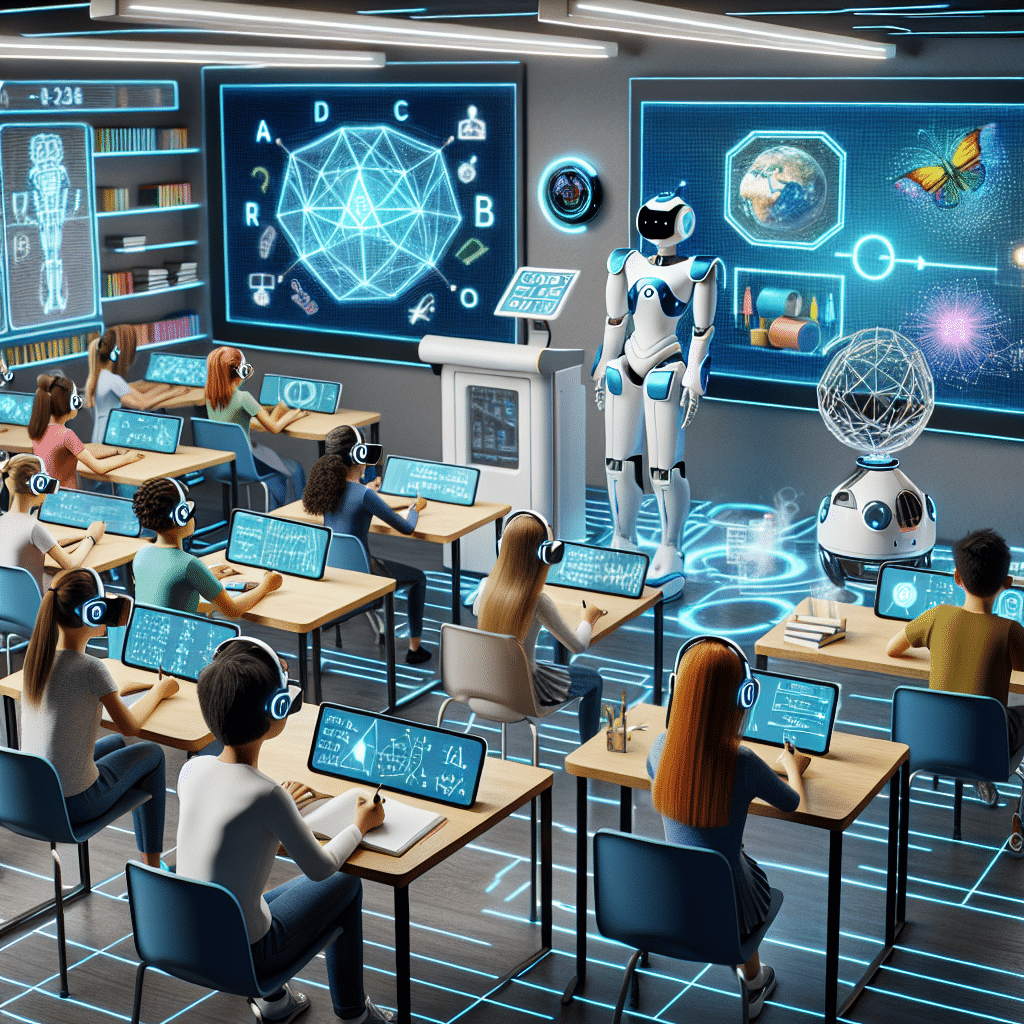
🌟 Empowering Students as Active Participants in AI-Enhanced Learning
As educational AI becomes more prevalent, students themselves should understand how these systems work and participate in shaping their use. Digital literacy must expand to include AI literacy—understanding how algorithms make decisions, recognizing the limitations of AI-generated recommendations, and maintaining critical thinking about technology-mediated learning experiences.
Students can provide valuable feedback about what works and what doesn’t in AI-powered learning tools. Their insights about user experience, engagement, and effectiveness should inform ongoing refinement and development. This participatory approach not only improves the tools but also empowers students as stakeholders in their education rather than passive recipients of technological interventions.
The revolution in personalized learning powered by artificial intelligence holds transformative potential for education. By tailoring content, pacing, and instruction to individual needs, AI tools can help every student reach their full potential while supporting teachers in their essential work. Success requires thoughtful implementation that maintains human relationships at the center of education, addresses legitimate concerns about privacy and equity, and views AI as a powerful tool for amplifying rather than replacing the irreplaceable human elements of teaching and learning. As we navigate this exciting frontier, our focus must remain steadfast on the ultimate goal: preparing all students not just for academic success, but for meaningful, productive, and fulfilling lives in an increasingly complex world.
